BRNKL Black, paired with BRNKL MAREC, has been officially named as the approved technology platform for NATO HFM RTG-419 — formally known as the MASHIEN Study (MultiAgency, prospective, exploratory, non-intervention, cohort Study on Human Impact Exposure oNboard high-speed boats).
Led by Dr. Johan Ullman and Prof. Stephen Myers, the study spans 16 NATO member nations and runs from December 2025 to December 2028. Mission Dynamics supplies this package to European operators as the authorised BRNKL distributor.
Pricing is available on request and depends on vessel configuration, installation requirements, sensors, cameras, data integration and support requirements.
For defence organisations, government agencies, research institutions and professional high-speed craft operators across 16 participating NATO nations.
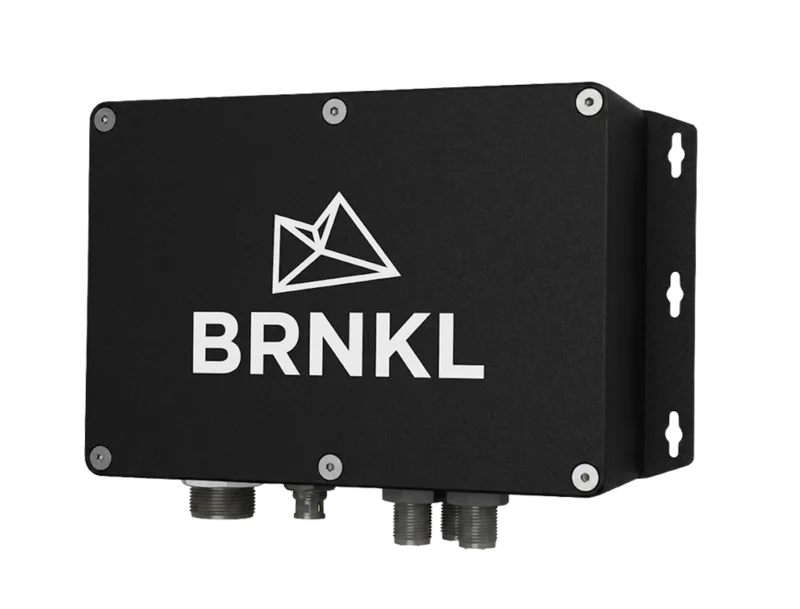
3-axis sensors mounted at hull, seat and operator positions capturing raw impact data
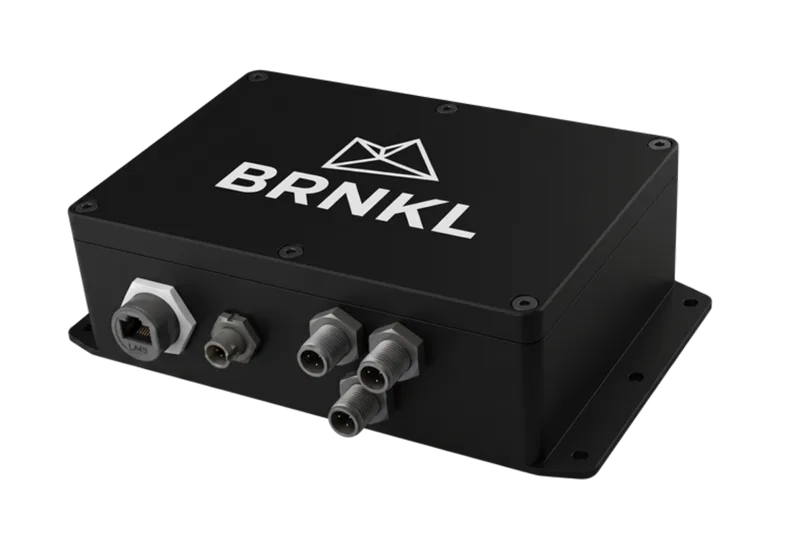
Collects and processes high-frequency motion data from all accelerometers
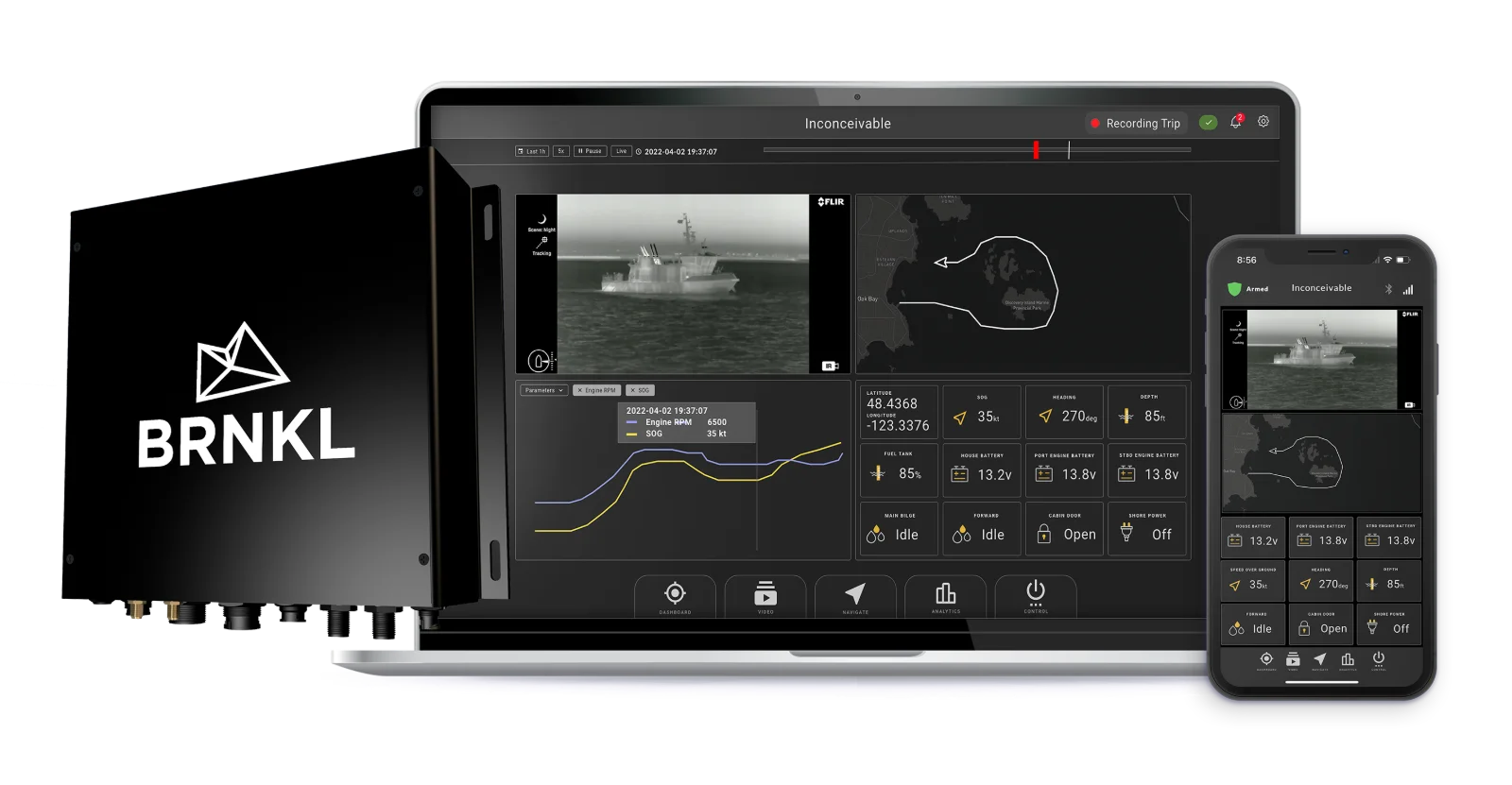
Fuses MAREC motion data with GPS and vessel telemetry into one time-synchronised record
Single time-synchronised record ready for transfer and study submission
No internet or cloud connection required at any stage of data capture or storage.
High-speed boat operators routinely face high, rapid-onset impacts of 3–25+ g, causing fatigue, musculoskeletal injury and traumatic brain injuries (TBIs). The NATO HFM RTG-419 MASHIEN Study — led by Dr. Johan Ullman and Prof. Stephen Myers across 16 NATO member nations — standardises the collection of acceleration data from both vessels and operators to link impact characteristics and identify harmful exposure thresholds across the full range of sea conditions.
Participating nations include Sweden, Norway, Denmark, Finland, Germany, the United Kingdom, France, Belgium, Ireland, Portugal, Italy, the Netherlands, Canada and the United States. The study runs from December 2025 to December 2028.
Establish the incidence of impact-induced injuries and cognitive symptoms — including TBIs — among high-speed boat operators.
Define the levels and characteristics of human impact exposure at sea across the full range of operating conditions.
Identify which impact levels are sustainable and which are injurious — establishing common NATO standards for exposure limits.
Support recommendations for training, operational exposure limits and vessel design across participating nations.
Develop smart signal solutions for real-time operator guidance in the field, informed by standardised study data.
Refine operating practices, reduce harmful exposure and support safer high-speed craft operations across the alliance.
BRNKL Black, paired with MAREC, provides the complete data collection infrastructure for the MASHIEN Study. MAREC captures high-resolution, high-frequency motion data using connected 3-axis accelerometers — enabling whole body vibration (WBV) measurement, shock and impact analysis, and high-frequency motion capture. That data is transmitted to BRNKL Black, where it is fused with vessel data and GPS to create a single, time-synchronised mission record with no internet or cloud connection required.
Three wired 3-axis impact sensors are included as standard, supporting measurement across the hull, seating and operator positions.
MAREC accelerometers capture motion data from the hull, seats and operator measurement points.
MAREC sends high-frequency motion data to BRNKL Black.
BRNKL Black fuses motion data with GPS and other vessel data.
The system creates one time-synchronised mission record.
Data is transferred through USB, secure download or automatic transfer where configured.
The NATO Study Package is available in two configurations to suit dedicated fleet deployments or vessel-to-vessel research activity.
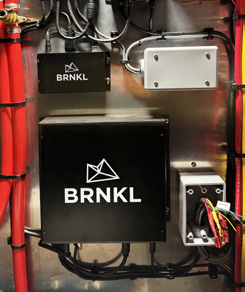
BRNKL Black and MAREC mounted directly onto the vessel, connecting into NMEA 2000, IP networks and other onboard systems. For dedicated high-speed craft, fleet trials and repeatable operational monitoring.
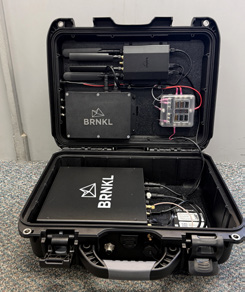
BRNKL Black, MAREC and a WiFi router mounted into a waterproof hard-case (16.7″ × 13.4″ × 6.8″). Moves between vessels with no setup required. For trials, research activity and temporary operator studies.
| General | |
|---|---|
| Dimensions | 198 mm x 119 mm x 61 mm |
| Weight | 2.136 lbs |
| Temperature | -40°C to +75°C |
| Power consumption | 160 mA at 12 V DC |
| Connections | |
|---|---|
| Accelerometer inputs | 3 wired 3-axis inputs |
| Ethernet | 1 wired port |
| Power | 10-30 V DC |
| Accelerometer Specifications | |
|---|---|
| Dimensions | 35 mm x 35 mm x 15 mm |
| Mounting | Flange |
| Sample rate | 7 to 3,800 Hz |
| Range | +/- 19 g |
| Included Accessories | |
|---|---|
| 3 accelerometers with cables, power cable, installation guide |
Multiple MAREC devices can be added to expand sensor coverage across operators, seating positions or the wider vessel.
BRNKL Fleet ingests and contextualises data from MARC and BRNKL Black deployments, transforming raw vessel and operator data into actionable readiness intelligence. Deployable on-premise, in government cloud, or fully offline.
Map impact hotspots
Track hull, crew and equipment exposure
Identify emerging impact or vibration patterns
Support readiness and maintenance decisions
Mission Dynamics is an authorised distributor in Europe for BRNKL. We supply BRNKL Black, MAREC and the NATO Study Package to defence organisations, government agencies, research institutions and professional high-speed craft operators. We help specify the right package, discuss installation or portable deployment, and align the system to your operational need.